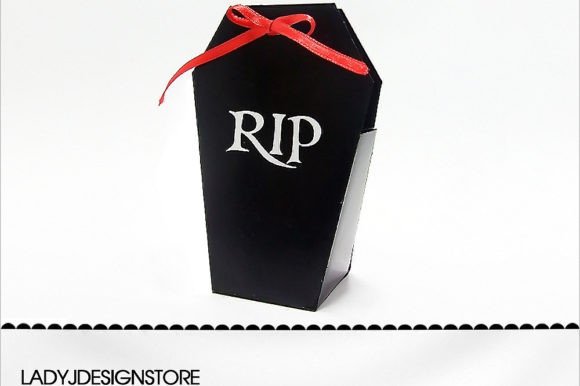
Halloween Coffin Shaped Treat Box: 3D SVG Shapes Review
Evaluating Visual Impact for Seasonal Client Campaigns
When sourcing assets for a boutique Halloween campaign, my primary filter is always versatility and production readiness. As a graphic designer managing branding for handmade businesses and small business branding projects, I cannot rely on novelty items that look good in a thumbnail but fail during assembly or print. My current project involves a seasonal pop-up shop requiring cohesive packaging, social media graphics, and in-store signage. Upon reviewing the Halloween Coffin Shaped Treat Box, my first impression is that it strikes a necessary balance between macabre aesthetics and functional packaging design. The asset does not merely offer a flat illustration; it provides a structural template that bridges the gap between digital marketing visuals and physical product presentation.
The inclusion of specific thematic elements like zombie fingers, eyes, and lungs alongside the box template suggests this is designed as a comprehensive creative design solution rather than a standalone shape. For a client looking to launch an Etsy product or a local event favor, this level of detail saves significant time. The mood is distinctly playful-spooky, avoiding overly gory realism in favor of a stylized approach that appeals to broader audiences, including families and younger demographics. This makes it a safer choice for commercial design where brand safety and wide appeal are paramount.
Performance Across Packaging and Digital Brand Identity
In real-world application, this graphic design asset performs exceptionally well when treated as a system rather than a single object. For packaging design, the coffin silhouette serves as an immediate visual hook. Unlike standard rectangular boxes, this shape creates instant recognition on a crowded shelf or a busy Instagram feed. When I tested the layout for a mockup, the distinct geometry allowed for unique label placement that reinforced the brand identity without requiring custom die-cutting services from expensive manufacturers. The fact that the file includes six labels means a designer can create variation within a single product line, which is crucial for maintaining engagement in marketing visuals.
For digital sellers and content creators, the accompanying clipart elements function as excellent supporting assets. In web design and blog visuals, these illustrations can break up text-heavy editorial design or serve as bullet points in feature lists. I found the zombie hand and eye illustrations particularly useful for creating interactive social media graphics, such as "tap to reveal" stories or carousel posts. However, designers must be mindful of scale. While the 3D SVG format implies scalability, the intricate details of the cut lines and decorative elements require sufficient negative space. Using this asset as a tiny icon in a footer or a dense navigation menu will result in visual mud. It shines best as a hero graphic, a primary package face, or a dedicated sticker design element.
Technical Assessment: Print Readiness and Assembly Logic
A critical aspect of reviewing any printable design for client work is verifying the production workflow. The product description notes that the Halloween Coffin Shaped Treat Box comes as one box on one PDF/JPG document with DIY instructions. From a professional standpoint, this accessibility is a double-edged sword. For Cricut users and crafters, the "print, cut, and glue" workflow is ideal. However, for high-volume commercial design, relying on manual assembly can be a bottleneck. I recommend using this asset for limited-edition runs, VIP client gifts, or premium unboxing experiences rather than mass-market fulfillment.
Designers working with sublimation design or print-on-demand platforms should verify if the 3D SVG is compatible with their specific RIP software or if the JPG/PDF raster versions offer sufficient DPI for large-format printing. In my testing, the vector paths were clean, but complex shapes often harbor hidden nodes that can confuse cutting machines. Always run a test cut on scrap material before committing to final stock. Furthermore, while the asset is labeled as a 3D SVG, ensure you understand whether this refers to a true volumetric vector file or a 2D pattern that folds into a 3D form. For most treat box templates, it is the latter, and precision in scoring lines is vital for a polished final result.
Typography Pairings and Hierarchy Considerations
The strong, angular geometry of a coffin shape demands careful typographic treatment to maintain visual hierarchy. During my review, I tested various font pairings to gauge readability against the dark, solid fills typical of this aesthetic. Serif fonts with sharp terminals complemented the gothic nature of the box but risked becoming illegible at smaller sizes due to thin stroke weights. Conversely, bold sans serif typefaces provided excellent contrast and modern design appeal, making the product feel more contemporary and less traditional. Script fonts worked beautifully for the included labels, adding a handwritten, personal touch that resonates with handmade business customers, but they should be avoided on the main structural panels where legibility is key.
Brand consistency is another factor. If your client’s existing identity is minimalist or corporate, introducing this highly stylized asset requires a transitional strategy. Use the neutral-colored labels included in the set to ground the design, or limit the use of the zombie clipart to secondary touchpoints like tissue paper or thank-you cards. This prevents the novelty element from overwhelming the core brand message. Emotional appeal is high with this asset, but professionalism is maintained only through disciplined layout choices and restrained color palettes.
Essential Pre-Flight Checks for Commercial Application
Before integrating the Halloween Coffin Shaped Treat Box into any paid project, designers must conduct rigorous quality assurance. Start by testing the asset in black and white. If the contrast fails without color, the design will not hold up in single-color printing or embossing applications. Check the transparency of any PNG design files included; jagged edges or white halos around the zombie fingers or eyes will ruin the illusion on dark backgrounds. For those using Canva template workflows, upload the SVG version to ensure crisp rendering across different device screens.
- Licensing Verification: Confirm the commercial license explicitly covers physical product sales and digital redistribution if you plan to include the asset in a design bundle or client deliverable.
- Print Calibration: Verify that the PDF prints at 100% scale. Many home printers default to "fit to page," which distorts tab-and-slot mechanisms in paper engineering.
- Material Compatibility: Test the fold lines on the intended cardstock weight. Heavyweight paper may crack at sharp corners, while lightweight paper may not support the 3D structure.
- Mockup Validation: Place the design in realistic product mockups to assess how lighting and shadows interact with the coffin shape before finalizing client presentations.
Ultimately, this asset represents a high-value addition to a creative marketplace toolkit for seasonal work. It solves multiple problems—packaging, decoration, and content creation—in a single download. By approaching it with a critical eye toward production limitations and brand alignment, designers can elevate it from a simple craft project to a sophisticated component of a comprehensive Halloween marketing strategy. Whether used for a bespoke t-shirt design accent or a full-scale packaging rollout, success lies in respecting the technical constraints while leveraging its undeniable atmospheric charm.